Now that it’s starting to get cold again and the entire world is stoked for the upcoming ski season, it seems appropriate to lay out a few thoughts on cold weather medicine to see if we can drum up some conversation on the idea. The basic premise of this blog post is just to lay out some considerations for how to manage medications in cold weather situations - both in front-country, normal environments and also in more austere settings.
We’ll frame it all like this:
- issues with medication delivery in the cold
- potential solutions based on setting
- unanswered questions on the idea
Issues with Medication Delivery in the Cold
Medication delivery in cold environments can be broadly broken down into two distinct categories/ challenges: stability of the medications & pharmacokinetics in the cold patient.
Regarding the first, the National Park Service did a cool study back in 2017 that looked at the stability of medications carried by Parkmedics in both hot and cold environments. Part of the study simulated cold weather environments over four weeks. Some drugs (including morphine and ondansetron) were stable in both heat and cold, others (atropine & naloxone) did fine in cold only, and then some (diphenhydramine, fentanyl, midazolam) did not fare so well at all in the cold or in the heat.
A similar and more recent study in the Journal of Trauma & Acute Care Surgery did something similar and provides this summary graphic:
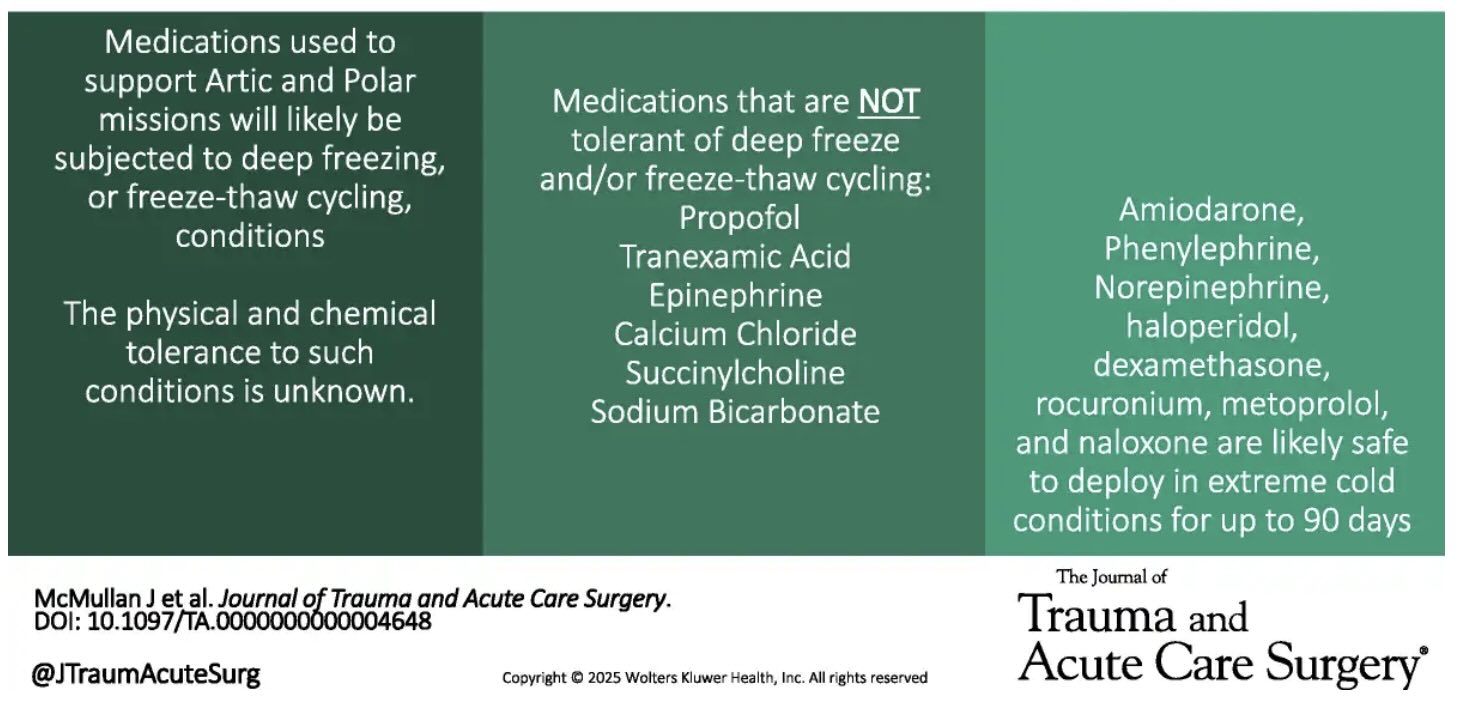
And then following along with this idea is the idea that liquid medications can freeze if unprotected - this would obviously make these medications unusable in the moment. That said, Sohm & friends (2025) recently looked into this idea by simulating a mountain rescue scenario in extreme cold - they looked at stability of parenteral meds commonly used in this setting while stored in a backpack and determined that the medications broadly retained their therapeutic use after 45 minutes of exposure, even when freeze/ thaw could not be definitely excluded. So that’s cool.
Takeaway from these articles is that long term cold exposure can make parenteral meds go off/ lose efficacy sooner than they otherwise would, but short-term cold exposure is prolly aight so long as the med is in liquid form and able to be drawn up when needed.
Regarding the second challenge with giving medications in the cold, the 2010 study Effects of Hypothermia on Pharmacokinetics and Pharmacodynamics was a systematic review that looked at the extreme end of this idea in truly hypothermic patients. In broad strokes, cold delays drug absorption, decreases drug distribution, and prolongs drug clearance. Now it can be assumed that these effects are less-pronounced in patients who are only mildly hypothermic, but they are worth keeping in mind. And then another thing they mention that we’ll come back to in a moment is that GI absorption of medications is highly variable in truly hypothermic patients.
Specific to the outdoor setting and cold-weather utilization of parenteral (i.e., intravenous/ IV or intramuscular/ IM) delivery, there is some concern that absorption of medications via the IM route (and likely intranasal/ IN also) is less reliable than IV administration. This is mentioned very briefly in this scoping review of trauma management in the mountains.
And fleshed out a bit more in this paper on analgesia specifically, also in reference to mountain rescue.
Potential Solutions Based on Setting
Given these two broad issues or challenges, mitigation would look like this:
- keep the meds warm
- keep the patient warm
Keep the Meds Warm
This basic idea varies a lot based on what sort of setting we are working in. We’ll just outline a few considerations for keeping meds warm in each of the following settings:
EMS (both ground & flight) - store meds inside or in a heated vehicle; potential issues with prolonged scene time or with a vehicle that is outside and shut down (frequent situation in air medical); stash emergency meds in a pocket/ chest harness if need be, can also use a heat pack if need be (often readily available)
Search & Rescue, Ski Patrol, Outdoor Professional - pretty common to carry medications/ aid kits in a pack and probably fine in most cases so long as the medications aren’t frozen when you need them; try to keep in the center of the pack for more insulation; long-term storage should be somewhere temperature controlled (i.e., patrol shack or base of operations); and same as above - stash necessary meds in a pocket/ chest harness if need be, consider a heat pack
Recreational Outside Adventures - more likely to be enteral/ oral/ PO meds than parenteral preparations; in general pills are very stable in cold and the concerns mainly focus on moisture exposure (particularly on warming, moving back into shelter), coatings on capsules, & gels inside of capsules (which can freeze); solutions would be using intact blister packs for meds and/ or desiccants & sticking with standard-release/ uncoated tabs
Expedition - probably a mix of both enteral and parenteral meds; likely OK if parenteral medications are rewarmed in camp each night and kept in a pack daytime; potential degradation of certain meds with long-term exposure (as discussed above); also there is the idea that cold exposure can damage packaging - glass can shatter, caps can pop off, etc. - this sort of thing would likely happen more frequently in the expedition setting where meds are exposed to cold long-term
Combat/ Volatile Settings - the profile of which meds may be needed is different in this case, but the general considerations stay the same; one big difference would be time sensitivity, so having parenteral meds on one’s person and warm and packaged with or close to the things needed for delivery (i.e. needles, syringe, IV kit, etc.) is probably best; a chest rig close to the core (i.e., under layers) is a common solution, however may fail with plates/ body armor - consider a fanny-pack style device that sits below the plates and against the skin or the “Base Layer Transport System” as mentioned in both of these places:
Dr. Emily Johnston at SOMSA 2025
The Tactical Alpinism Podcast with Dr. Emily Johnston
And then a few tangential points on all of this:
- consider replacing medications more frequently with routine cold exposure; an example would be every season or year vs. simply by the date stated on the vials
- ways to use your body heat to keep medications warm, in presumed order from least to most effective (i.e., we have no data on this and are just guessing):
- chest rig that sits underneath all the warm layers
- low-profile fanny pack that holds meds close to the skin
- the “Base Layer Transport System” noted above
- and a few commercial & improvised devices, listed roughly from smallest capacity (for individual use) to larger (for team/ expedition use):
- CaseMD has a product for keeping meds at a stable temperature, designed for the private citizen out there in the wild, but potentially usable in some applications by clinicians
- Operation Makerspace has some cool gadgets on their IG page, but their webpage is still in the process of getting set up (see screenshot below)
- Pelican case or similar with some sort of heating element or space for heat packs/ bottle of warm water
- Solar panel + (insulated) power bank + cooler + heating pad solution as outlined here
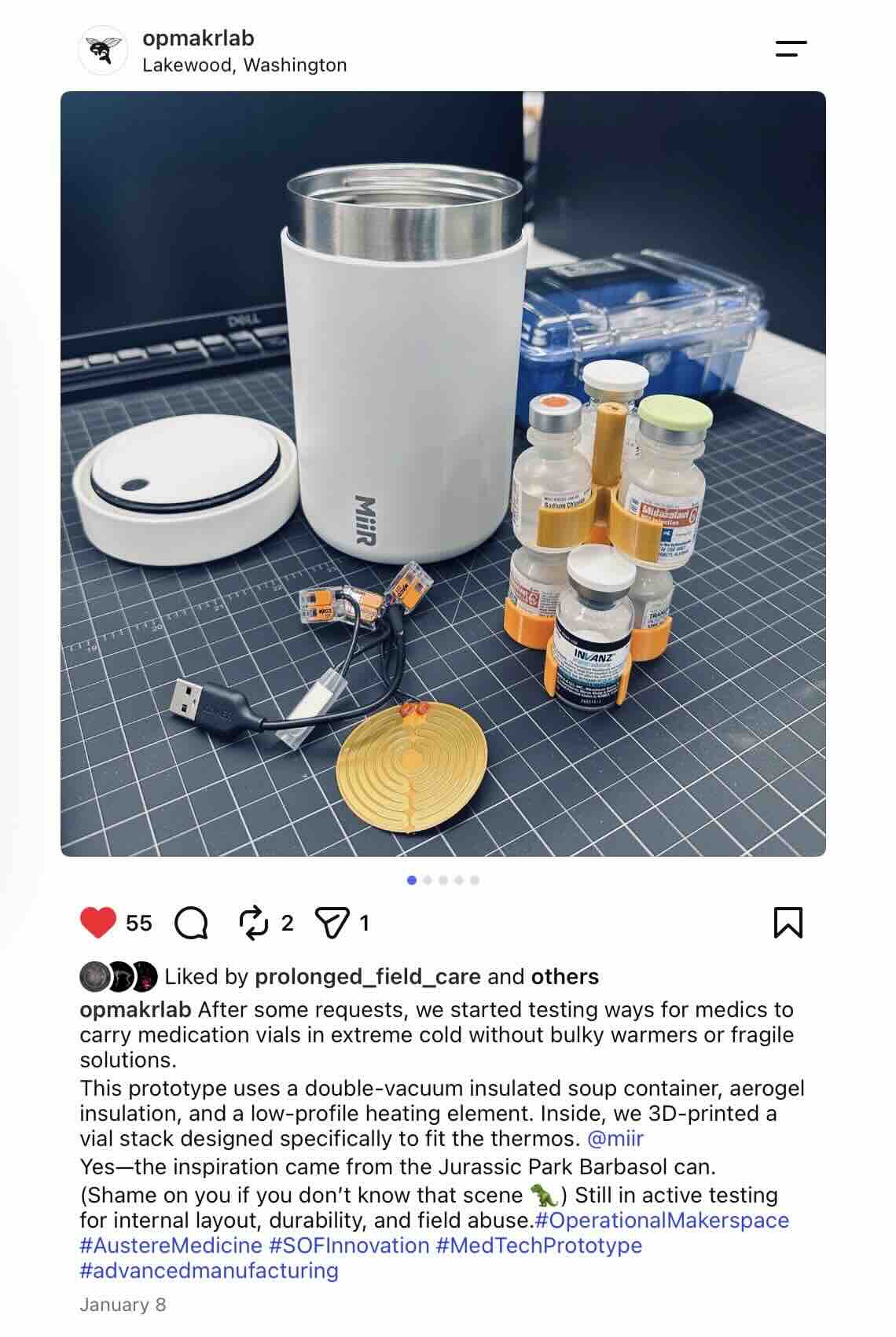
- And in general for all of these strategies, consider a thermometer/ temp logger to avoid swinging too far on the side of overheating the medications:
- Something like this
- Maybe something like this also, but unclear how these devices would hold up
Keep the Patient Warm
There is tons of content out there on how to keep patients warm, so rather than review them all here, we’ll just share some links for further reading:
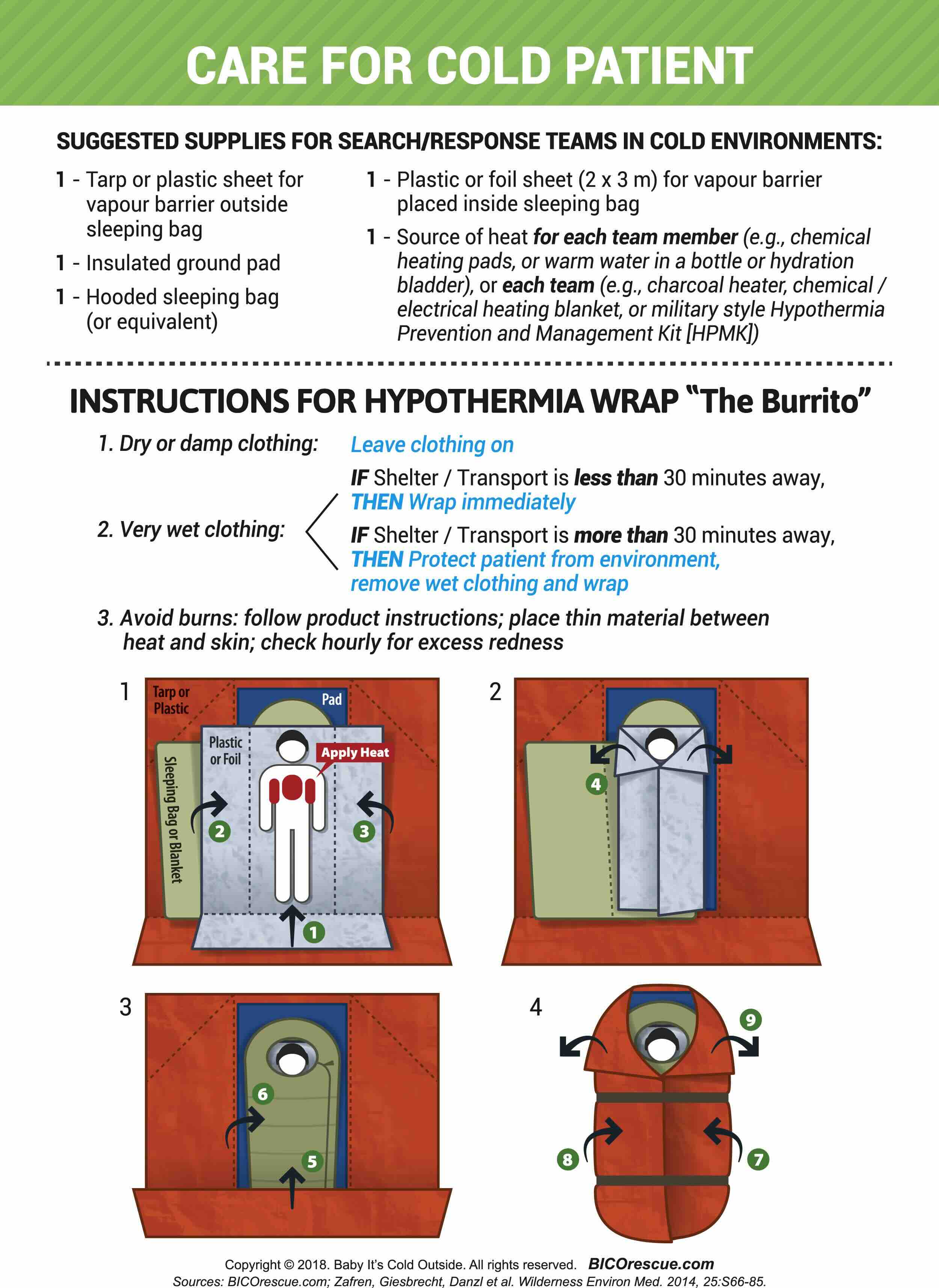
- WMS Guidelines on Hypothermia, which includes this graphic on building a hypothermia wrap or “hypo wrap:”
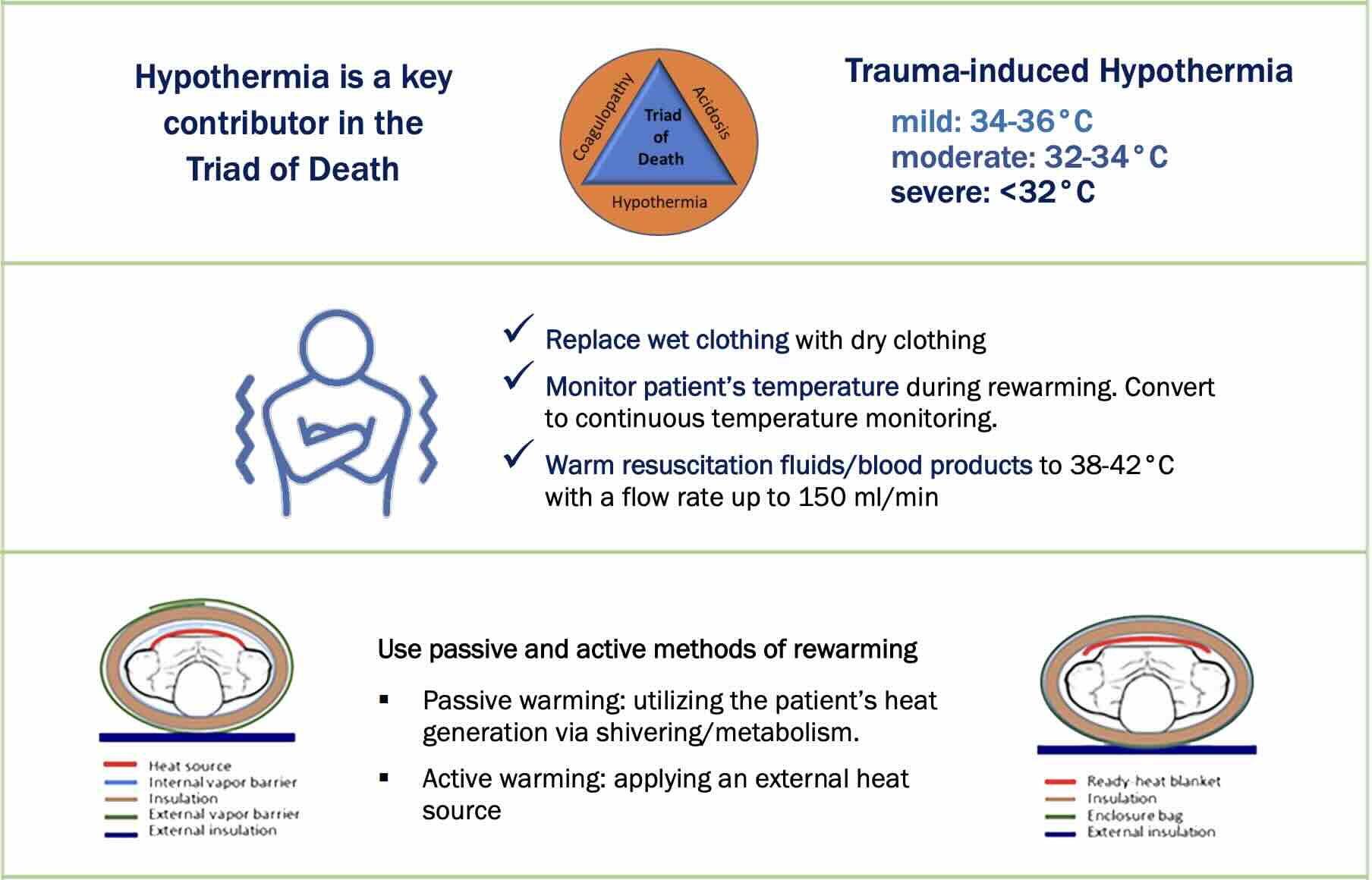
- JTS CPG on Hypothermia which includes this guidance:
And then just to list a few toys that we work with/ carry routinely:
- LifeBlanket - hypowrap/ insulation cocoon for a stretcher or sled, website looks like 1999, but it’s a good product
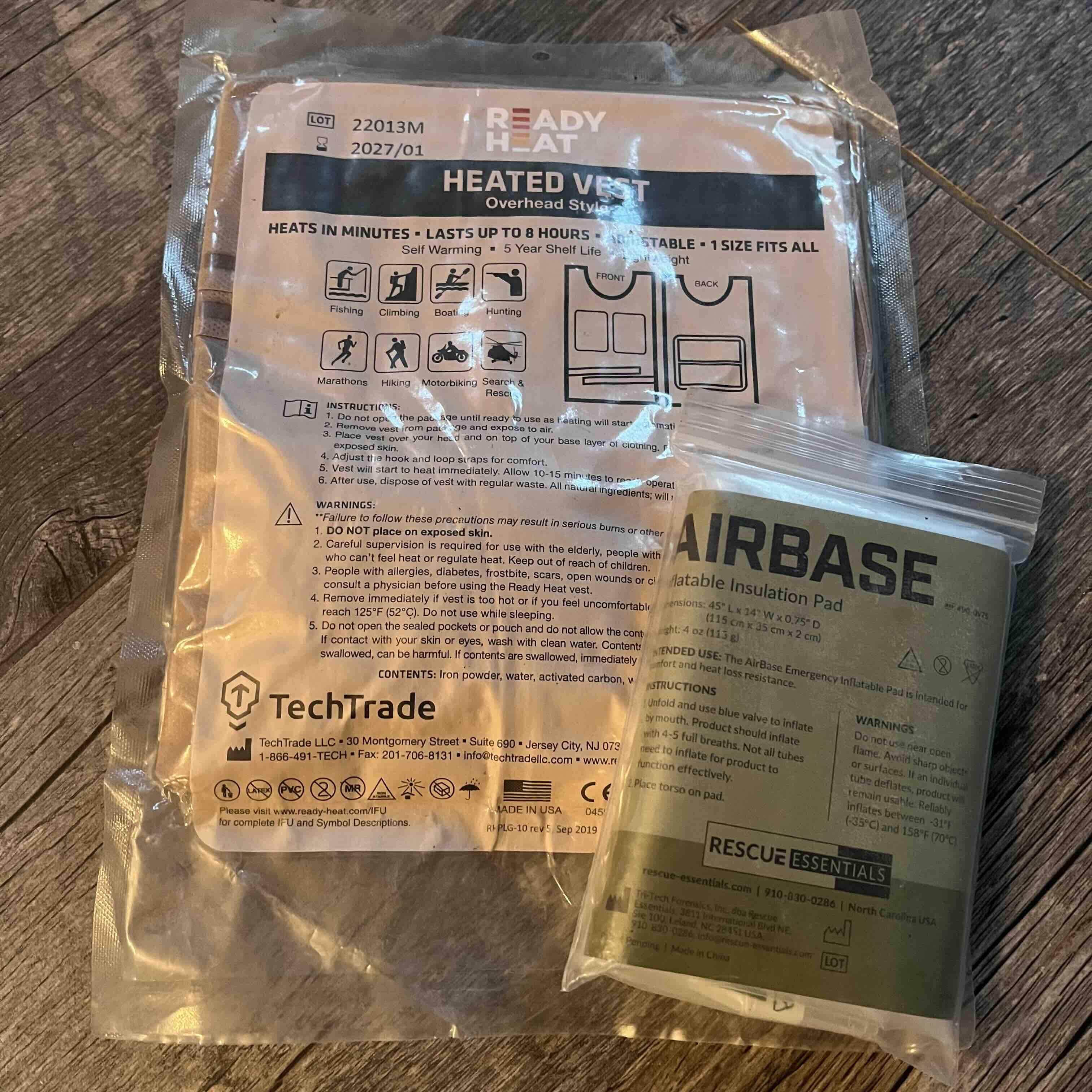
- ReadyHeat Heated Vest - single-use heated vest that weighs in at 10oz and packs flat into a pack, less than $50; also a janky website, but whatever
- AirBase Thermal Pad - $10 and 3oz, single-use, not a bad option if we want some sort of ground barrier in an emergency, but can’t be bothered to carry an actual pad
Photo of both ReadyHeat Vest and AirBase to see how they pack down:
Unanswered Questions on the Idea
We’ll wrap this up with a simple list of things we’ve been thinking on in terms of medication utilization and administration in the cold:
Does it make sense to preferentially choose enteral/ PO/ oral/ meds to simply dodge the hassle of keeping meds warm?
Probably depends mostly on one’s setting/ mission profile. For recreational stuff, sure. For high risk things where trauma is a possibility, probably makes sense to have a keep-the-meds-warm plan. In the middle area between those extremes it probably depends a lot on timeline. Giving IV/ IM analgesia or dexamethasone (for altitude stuff) maybe makes sense when a patient will be evacuated quickly; PO options are probably fine if the operation is a multi-day affair. But also some meds need to be given parenterally - IM epi in anaphylaxis, for example. Although, to be fair, this is less likely to occur in cold settings unless in response to antibiotics/ things that we are doing as providers. That said, cold-induced anaphylaxis is a thing to be aware of: Bizjak & friends, 2025 discuss this idea. This sort of thing is for sure up for discussion, as there are lots of considerations to be had.
Is there any utility in using reconstituted parenteral med preparation?
Once upon a time we stumbled across a reconstituted preparation of TXA available from some med supply company overseas. Turns out a lot of the meds that are typically only available as liquid can be purchased in powdered form for reconstitution with sterile water or saline before use. The thought process at the time was like so: maybe these powders are more stable (i.e., they won’t freeze), so how about a med kit of just reconstituted meds - all we’d have to do is keep a handful of sterile water/ saline vials warm, would be easy with a small pouch against the body for warmth.
This idea holds relevance now that freeze-dried plasma is FDA approved here in the US, arguments in favor of that sort of thing could apply to other meds/ agents as well.
Downsides: not routinely available for many meds, takes time to reconstitute, likely more difficult to reconstitute a cold powder (ever tried shaking a protein drink with mega cold water?), etc. Probably not realistic, but a potential solution for some things - maybe just those meds that don’t fare so well in the cold? Interested to hear what folks have to say on that one.
How best to utilize meds that have been exposed to extreme cold for prolonged periods of time?
Let’s say we had a plan in place to keep meds warm, but there was a glitch in the process. Maybe high winds took out the solar panels or a pack was left out overnight. Ideally these things wouldn’t happen, but they will eventually…. Assuming the meds are simply less effective if they are still in usable shape, can we simply titrate to effect? Probably OK to do for warm patients. In the cold or hypothermic patient, however, it could be the absorption or distribution of the med that is the problem, so giving more could be problematic. Not really sure on this one, but the best plan would be to try and avoid this sort of thing in the first place with proper planning and contingencies.
That’s all we’ve got on the idea. As always, let us know what you think!